

Ex-demo grades explained
Ex-demo stock does not all land in the same condition, even when two machines share the same category and size. This guide sets out what A, B and C grade usually mean at our Pretoria West outlet and what you give up at each step down.
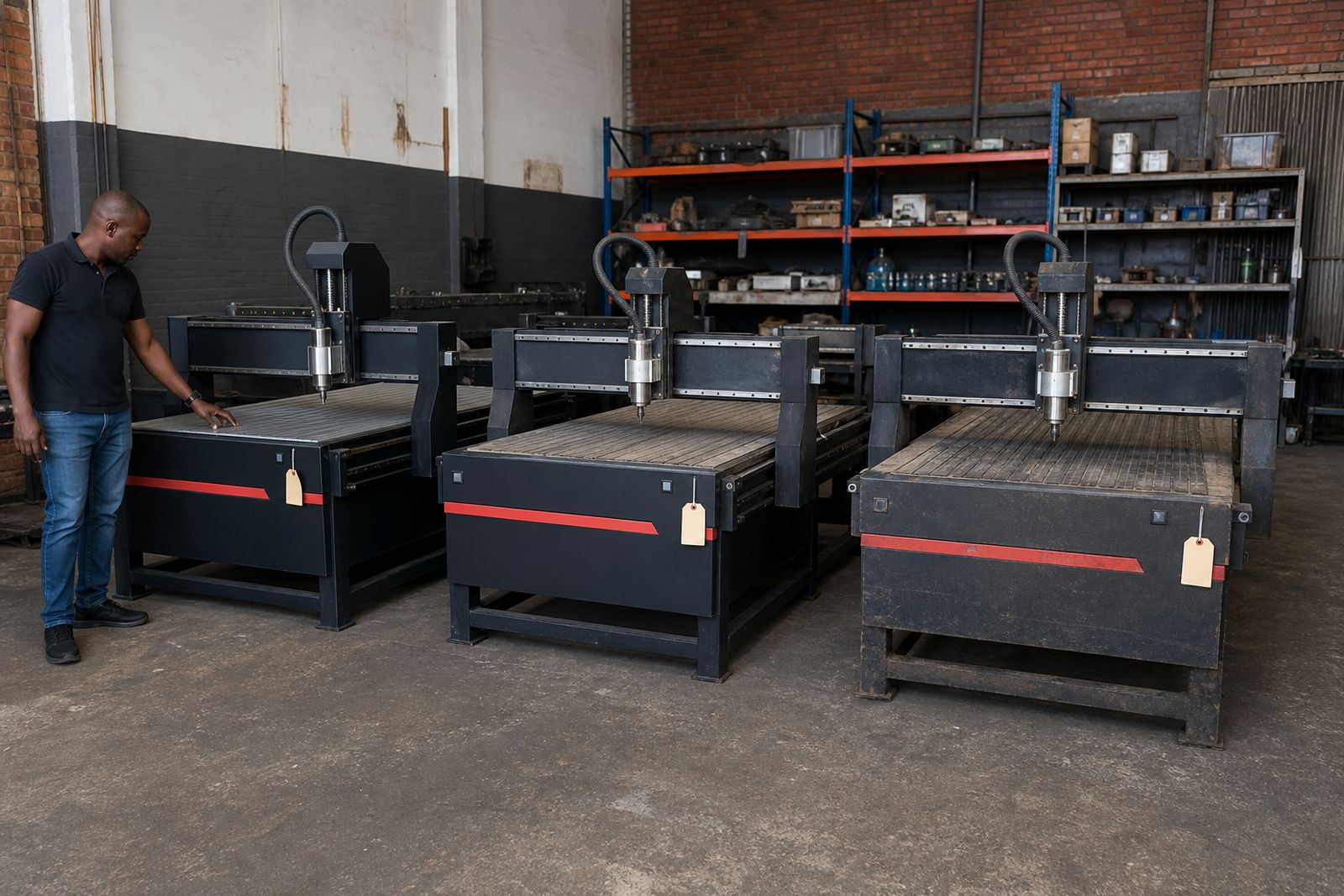
How our grading works on the outlet floor
We use A, B and C grades to describe the condition of ex-demo machinery and related workshop stock in a way that is quick to read and easy to compare. The grade reflects condition and completeness across the outlet range. A smaller machine can still be A grade, while a larger unit can be C grade if it shows harder use, missing extras or cosmetic wear.
Every special should be read with the stock count and the deal end date. Ex-demo units move out of the outlet on a first-claimed basis, and two units with the same bed size or power level may not match exactly. One may have cleaner panels, fewer operating hours, a different accessory set or marks from handling. That is why the grade matters more than a broad product label.
The grading note sits alongside the item listing. It sits next to the model details, visible condition and included parts so you can judge whether the saving suits your workshop or not.
A grade: the closest to a clean showroom unit
A grade ex-demo stock is the nearest thing to a tidy display or test-run machine without calling it new. These units usually show very light handling marks, limited demonstration use and a more complete accessory set. Packaging may be opened or replaced, and there can be small signs from loading or standing on a floor, but the machine should present well.
- Light cosmetic marks only, such as faint scuffs on covers or base frames.
- Main operating parts present as listed, with standard items generally intact.
- Better suited where appearance matters to a client-facing studio or clean showroom area.
- Lower compromise if you want ex-demo pricing without much visible wear.
What you give up at A grade is mostly the idea of untouched stock. You may receive opened packaging, demo material residue, test cuts or a replacement consumable count rather than a full unopened pack. If the machine originally shipped with optional extras, only the items stated on the special should be assumed to be included.
B grade: honest wear with a worthwhile saving
B grade is where many practical buyers land. These machines normally have clear signs of use but remain a sensible fit for production, training rooms or workshops where finish on the cabinet is less important than function. You can expect visible scuffs, handling scratches, dust in corners, older film on panels or small cover wear. None of that is unusual on an ex-demo outlet floor.
This grade can also apply where the machine is complete for operation but not complete in the way the original packed unit would have been. A spare tray, extra clamp set, sample material pack or non-essential fitting may be absent. The saving is usually stronger than A grade because the compromise is easier to see.
- Good fit for buyers who care more about output than cosmetics.
- Possible signs of repeated demonstrations, transport or floor moves.
- May include substituted packaging, minor panel blemishes or faded labels.
- Check the exact included items if you need fixtures, chucks, lenses, cables or software-related accessories listed with the unit.
If your workshop can live with a few knocks and a less tidy presentation, B grade often gives the better Rand value. The main thing is to read the listing slowly and not assume completeness from the model name alone. It's easy to miss a small line about included extras.
C grade: biggest discount, biggest compromise
C grade stock is priced for buyers who can accept harder use, stronger cosmetic wear or a thinner set of included extras. On some items that means obvious scratches, worn paint, marked work surfaces, older housings or replaced covers. On others it means the machine is operational as listed but plainly not as neat as A or B grade.
This is also the grade where you should expect the broadest variation between one unit and the next. A C grade laser, router or cutter can still suit a workshop well if the application is right, but you must buy with open eyes. If your team needs a presentable machine for a front office demonstration area, C grade may be the wrong place to save.
- Best suited to production spaces where finish on the outer body matters less.
- May have stronger signs of wear on covers, feet, rails surrounds or handling points.
- Accessory sets can be reduced, so the included list matters more than usual.
- Ideal only if the price difference covers the visible compromise for your use.
C grade can affect appearance as well as convenience. You may also give up convenience if non-essential add-ons are not part of the special. That can still work out well for an experienced workshop that already holds compatible spares or fixtures.
Checks to make before you enquire on a graded item
The smartest way to compare outlet stock is to note the job you need the machine to do, then match that to grade, included items and the condition note. Buyers sometimes focus only on the special price and then realise later that the missing tray, fixture, rotary option, extraction fitting or spare holder was the part they actually needed.
- Confirm the exact model and working size shown on the special.
- Read the included-items line for accessories, software-related items and consumables.
- Check whether the stock count is one unit or several units.
- Note the deal end date, because monthly specials do change.
- Decide whether cosmetic wear matters in your workshop, showroom or studio.
- Consider collection from Pretoria West or delivery to your town before planning installation.
If anything in the listing is not clear, use our contact form and refer to the item category, model and grade. That keeps the enquiry tied to the live special rather than a general machine type.
How to decide between A, B and C for your workshop
Start with the role of the machine. If it will stand where clients see it often, or you need a cleaner presentation for training and demonstrations, A grade usually makes more sense. If the machine will live in a working production bay with dust, offcuts and regular handling, B grade is often the practical middle ground. If the saving is the main driver and your team is comfortable with visible wear, C grade can be the right buy.
Also weigh up what your workshop already has on hand. A buyer with spare clamps, lenses, holders or setup parts can make better use of a machine that is not fully accessorised. A first-time buyer may prefer the cleaner, more complete route even if the ticket is higher.
There is no single best grade across all categories. A router, laser, plasma unit, print machine or 3D printing item should be judged against the work you need from it and the exact listing on the special. The grade tells you the condition band and the likely compromise behind the price. The item notes tell you whether that specific unit fits the job.
Questions we get asked
Does A grade mean unused?
A grade is still ex-demo stock. It usually means lighter use, better appearance and a more complete set of listed items, but it is not treated as untouched boxed stock.
Can a C grade machine still be a good buy?
A C grade machine can still be a good buy if the visible wear and reduced extras do not affect your actual production needs. Many workshop buyers are happy to trade cleaner cosmetics for a sharper special price.
Do all units in one special have the same condition?
Units in one special do not always have the same condition. Even where model and category match, one unit can show different marks or accessory completeness from another. The stock count, condition note and included-items line should be read together.
Also worth a look

Tell us about the job
Send sizes, materials and where you are through our contact form, and we will come back with the practical options.
Open the contact form